
An open-source ecosystem designed to revolutionize biosensing
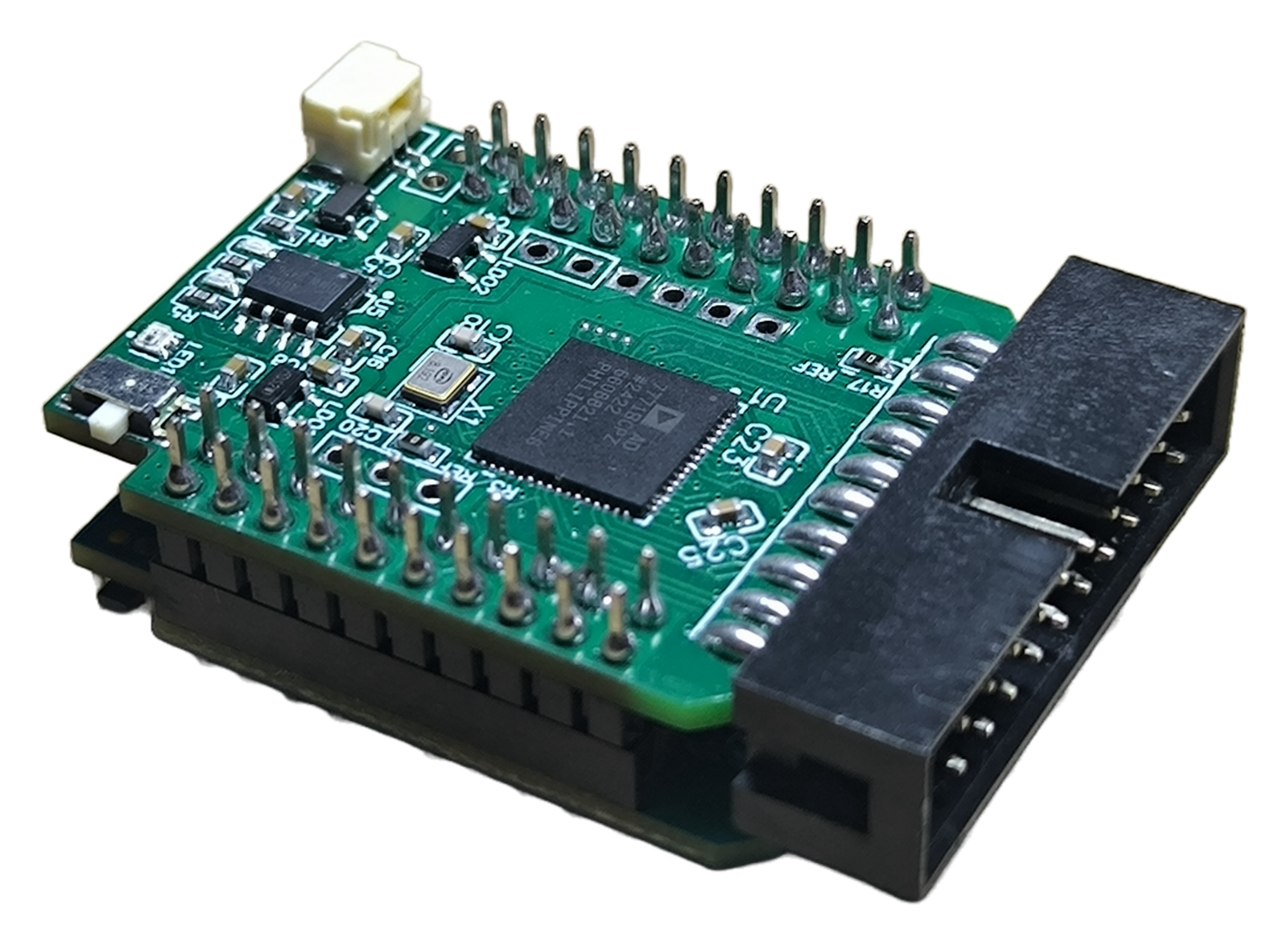
BioListener is a startup developing an open-source ecosystem built around portable, affordable, multi-channel biosensing boards. Our goal is to make biosensing accessible: instead of one costly device per group, everyone can have their own scientifically validated board to run hands-on experiments, do cross-disciplinary research, and build more complex devices.
- EEGBrain
- EMGMuscles
- ECGHeart
- EOGEyes
- Estimated cost per 8-channel board
- $30
- ADCs for precise signal capture
- 24-bit
- Per channel, up to, at current firmware version
- 2000 Hz
- Total weight with battery and 3D-printed enclosure
- 54 g
Our aim
Accessible, validated, and open to build on
We are building an open-source biosensing ecosystem, hardware and software together. It is not just a board for education: it is a framework any student can use as the basis for their own device.
- Why it is needed
- Biosensing boards record signals from the brain (EEG), muscles (EMG), heart (ECG), and eyes (EOG). Budgets often limit a group to one costly device, and the low-cost projects we reviewed require extensive programming and electronics experience.
- What makes it different
- It works as a dev board and a template: simple cross-disciplinary projects need no huge rewrites. Signal quality is scientifically validated, and the results are published. An 8-channel board costs an estimated $30. It is built for first-time users. Two board designs use different converter (ADC) chips, for resilience against chip shortages.
- What exists today
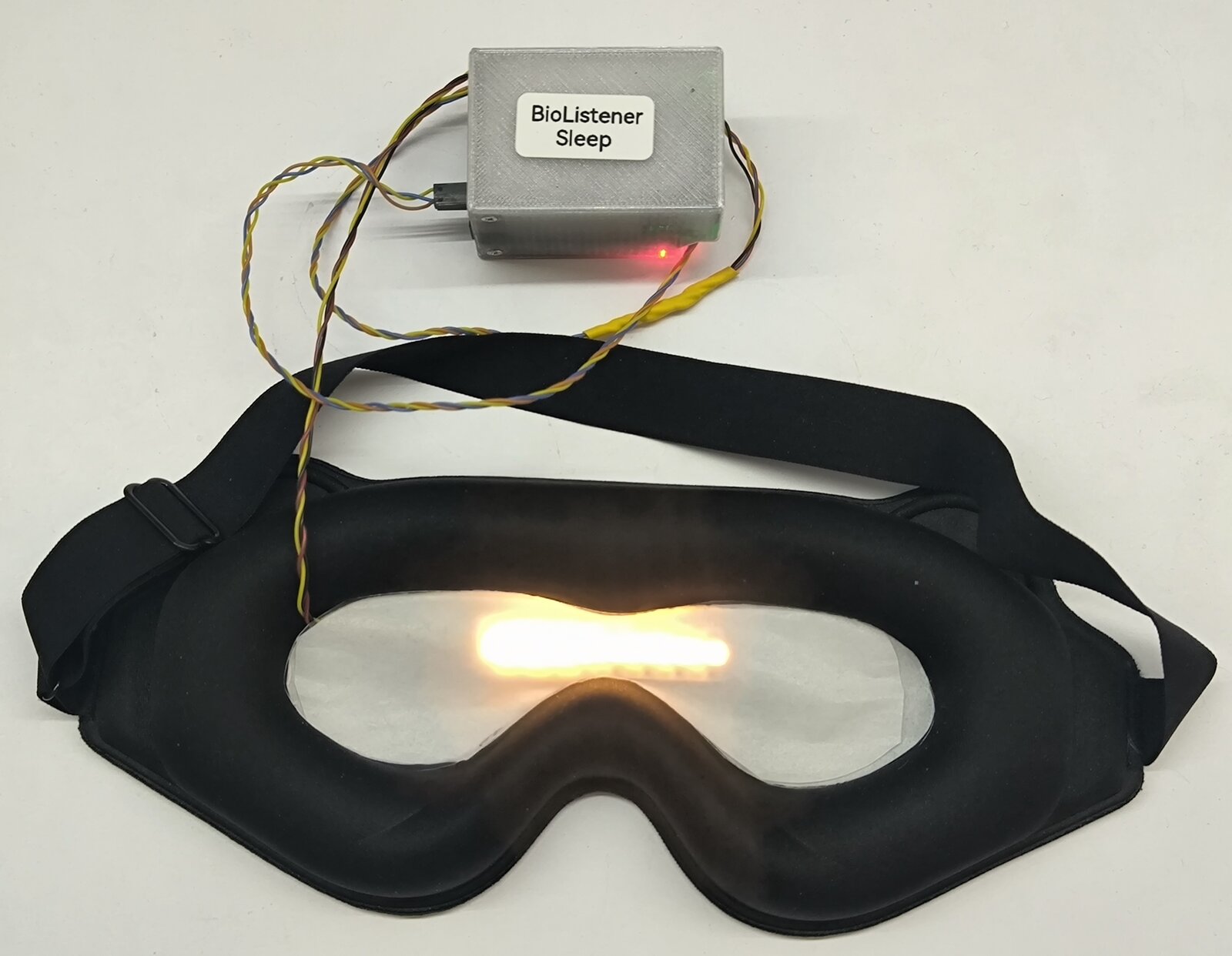
- Two working board designs, Wi-Fi firmware, a 3D-printed case, BrainFlow and OpenBCI GUI support, and a published evaluation with EEG, EMG, and ECG recordings. BioListener Sleep, a research system for closed-loop neurostimulation, is built on the board.
- What comes next
- Near term: board designs finalized for mass production, Bluetooth, offline recording to SD card, daisy-chaining to 16 channels, and plug-and-play apps. The larger aim: modular add-ons and accompanying research projects that apply the ecosystem in practice, with BioListener Sleep as the first.
Ecosystem
Hardware and software in one ecosystem
Boards, firmware, a case, software integrations, and evaluation tools, built to work together. Fully open-source.
BioListener Hardware
Two working 8-channel board designs, each built on a different ADC chip.
View repositoryv1.1BioListener Firmware
ESP32 firmware that streams biosignals over Wi-Fi to BrainFlow in real time.
View repositoryWi-FiBioListener 3D Models
A case for the boards that prints on a regular FDM 3D printer.
View repositoryPublishedBrainFlow integration
BioListener boards are supported in official BrainFlow, a library for reading and analyzing biosensor data.
View in BrainFlow docsOfficialOpenBCI GUI integration
Board support in OpenBCI GUI, for visualizing the data in real time.
View repositoryForkBioListener Evaluation
Scripts, data, and test setups for evaluating board performance and real-world use.
View repositoryPublished
BioListener Sleep
A closed-loop neurostimulation system for sleep onset optimization. It adapts stroboscopic light and generative audio to live EEG from the BioListener board. Researched in simulation; not a medical device.
Get in touch
Questions, collaboration, or contributions: write to us, or open an issue or pull request in the relevant repository.